
What Is Joint Business Planning (JBP)? A Guide for FMCG Suppliers and Retailers in the GCC


Share
Summarize with AI
Every FMCG supplier in the UAE and Saudi Arabia has sat through a joint business plan. Few have sat through one that actually changed how the year went.
That gap is the subject of this guide: what a JBP is, how the process works, where it breaks down, and what the strongest supplier-retailer relationships in the GCC do differently.
- A JBP is a shared, jointly built plan between a supplier and retailer covering shared goals, trade investment, and category strategy for a defined period, not something handed down by either side.
- It replaces annual negotiation with a continuous 5-stage cycle: Foundation, Discover & Align, Initiative Planning, Execute & Monitor, Review.
- Top-tier supplier-retailer relationships show 26.88% higher annualized revenue growth than the lowest tier, per Advantage Group's own benchmarking.
- Most JBPs fail not because the plan itself was wrong, but because the relationship underneath it (trust, data-sharing, follow-through) wasn't strong enough to carry it.
- In the GCC, a handful of retailer relationships (Lulu, Carrefour/Majid Al Futtaim, Choithrams, Spinneys, Union Coop, Nesto, Viva) carry disproportionate weight in a supplier's growth plan.
What a Joint Business Plan (JBP) Actually Is
A joint business plan (JBP) is a shared plan that both parties create between a supplier and a retailer, designed around clear goal setting, measurable objectives, and mutual goals for a defined period, rather than being handed down by either side. It replaces a purely transactional buying-and-selling relationship with a structured relationship that establishes strategic alignment, a shared vision, and long term goals between companies.
Done well, it delivers three concrete things a standard negotiation doesn't: aligned goals both teams are actually resourced to hit, a single forum where trade investment gets justified by data instead of leverage, and a working cadence that catches problems mid-year instead of at the annual review. A strong JBP can also benefit both business partners by supporting mutual growth and mutual success, not just accountability.
Why JBP Matters for Mutual Growth More Than Most Negotiations
Deloitte's research on retail-CPG collaboration found something worth sitting with: JBP is consistently rated by both retailers and suppliers as the most impactful area of collaboration, and yet it remains one of the least transformational in practice. The strongest JBPs work as living business plans for continuous improvement rather than annual negotiations. Most JBPs become an annual negotiation instead of a mechanism for continuous, profitable growth.
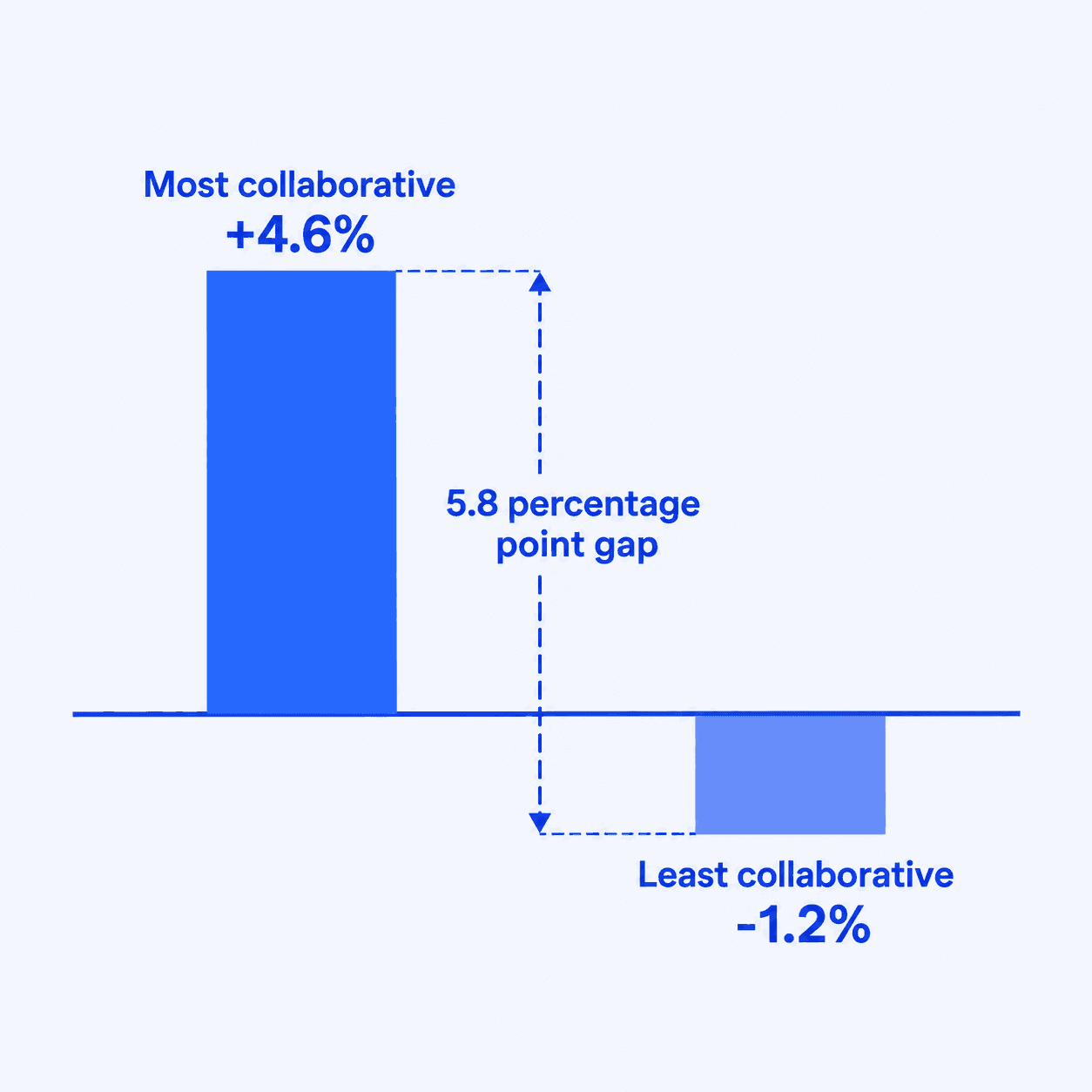
The data backs this up from the other direction too. Across a set of major global retailers, Advantage Group's own cross-retailer collaboration analysis found the most collaborative ones grew revenue by an average of 4.6%, while the least collaborative declined by 1.2%, a gap of 5.8 percentage points on the same shelf, in the same market. The difference wasn't strategy. It was whether the relationship behind the plan actually functioned, because that is what drives success: when strategic partnerships work, they build deep institutional trust between partners and create high barriers to entry for competitors.
The Key Elements of the JBP Process, Step by Step
A JBP that works moves through five stages as a collaborative process, and the fifth feeds back into the first: it's a cycle, not a one-time event.
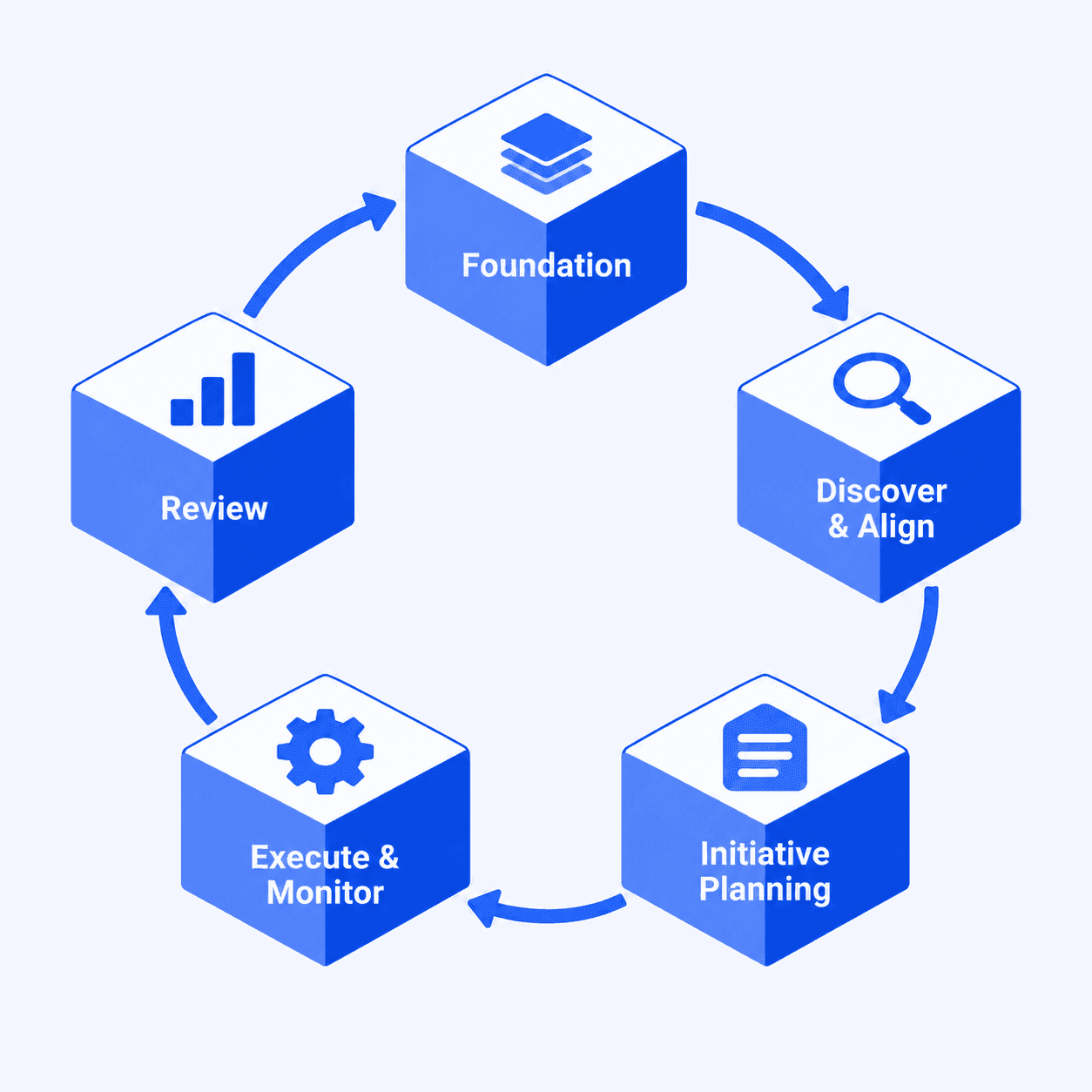
- Foundation: both sides share plans and data openly to build alignment around common objectives and the overall plan.
- Discover & Align: growth opportunities get named honestly, including where interests diverge, with early analysis of trends across the industry, consumers, and customers to surface challenges and growth opportunities.
- Initiative Planning: goals become specific tactics: category strategy, assortment optimization, promotional calendar, and trade investment terms, often formalized as SMART goals (specific, measurable, achievable, relevant, time-bound) backed by a formal contract. A joint plan typically defines the specific growth target for the period and the strategies needed to achieve it. Smaller suppliers without the resourcing for a full annual cycle often run a scaled-down "JBP lite" version of the same process rather than skipping it entirely.
- Execute & Monitor: progress gets tracked against agreed performance metrics continuously, not just at year-end, with clear accountability for owners on each action.
- Review: what worked and what didn't feeds back into the next Foundation stage, using analytics to make necessary adjustments and update risk management strategies.
Aligned forecasts are also part of inventory management and risk mitigation, since they help reduce stockouts and excess inventory.
Initiative Planning is the stage where most plans quietly go wrong, by agreeing to too much. The must-win battles framework covers how to decide which initiatives actually belong in the plan, and which ones to leave out.
The Modern, Data-Led JBP
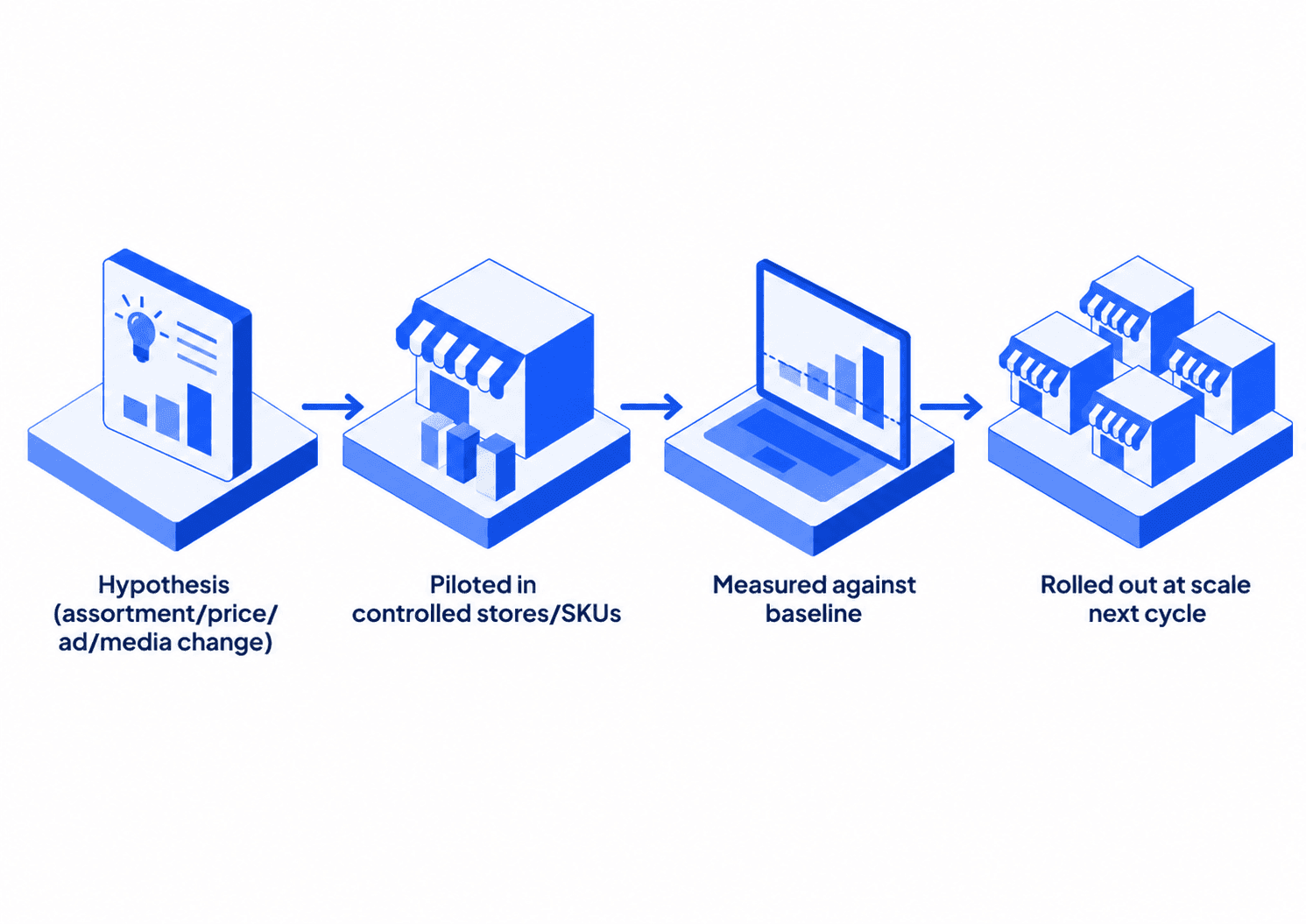
The strongest JBPs today use data to build a more adaptive collaborative strategy, not just a static annual document. They treat each initiative as a hypothesis to test: a specific assortment change, price adjustment, advertising effort, or media investment gets piloted across a controlled set of stores or SKUs, campaign performance is measured against a baseline, and what works gets rolled out at scale in the next cycle.
That's also why the Execute & Monitor stage above matters as much as the planning itself. A JBP with no mid-cycle measurement can't tell a working initiative from a stalled one until it's too late to adjust.
As e-commerce becomes a bigger share of GCC retail, the metrics tracked inside a JBP are expanding to match: website traffic, conversion rate, add-to-cart rate, and basket size increasingly sit alongside the traditional in-store measures, because the shelf a JBP is managing today is digital as much as physical, and those measures also support operational efficiency and can generate a greater return on media and trade investment.
Where Most JBPs Fail Between Business Partners
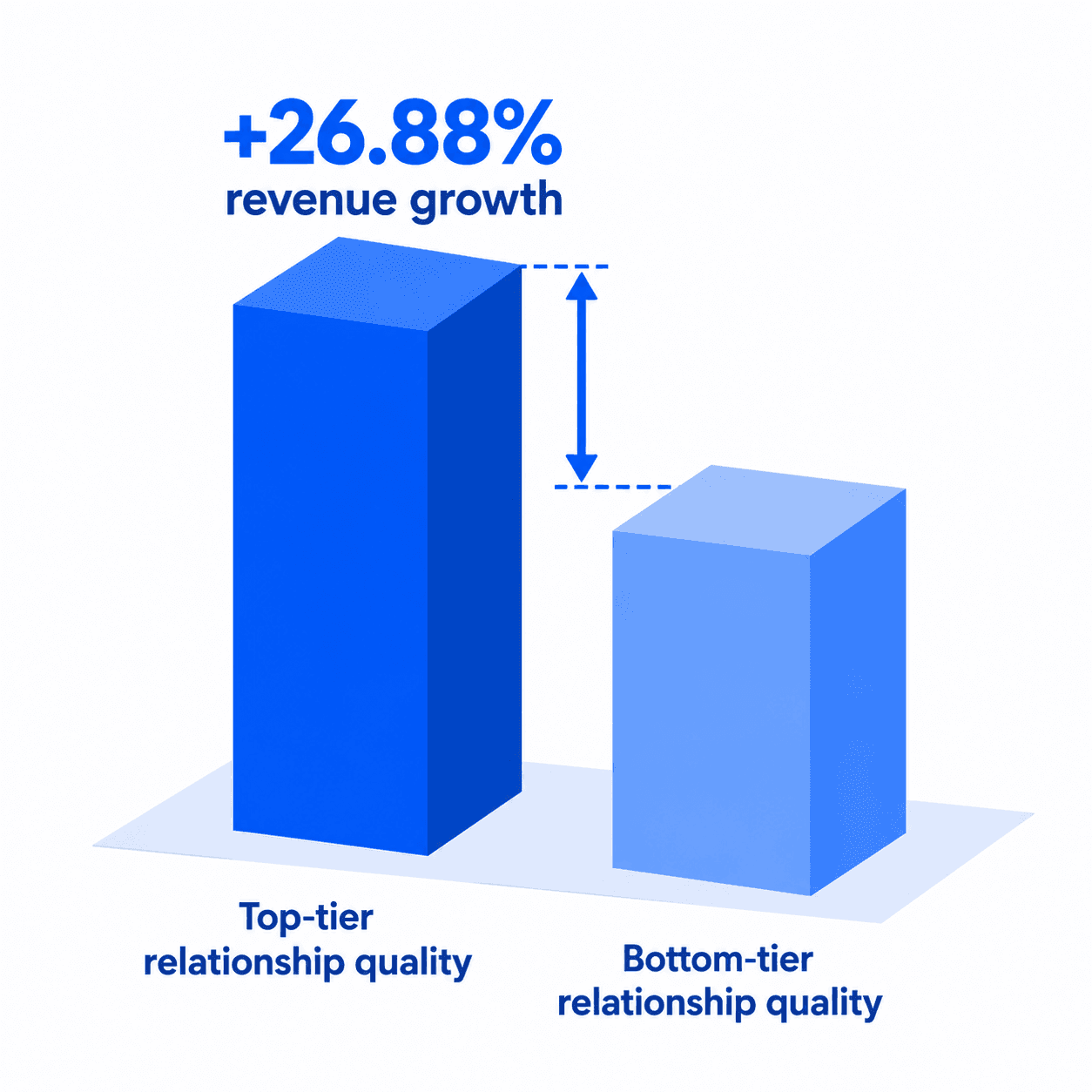
The pattern isn't mysterious once you look at engagement data. Suppliers with stronger, better-scored retailer relationships see measurably better outcomes: in Advantage Group's own benchmarking data, top-tier suppliers on relationship quality show 26.88% higher annualized revenue growth than the lowest-tier ones.
In-store execution matters just as much as the plan itself. Most shoppers still discover and buy products in-store rather than online, which is exactly why execution problems on the shelf do as much damage to a JBP as any planning failure.
In practice, a weak relationship shows up as specific, recurring friction: pricing disputes that resurface every quarter instead of getting resolved once, promotional plans changed at the last minute because neither side trusts the other's forecast, on-shelf-availability gaps each side blames on the other, and margin pressure renegotiated informally instead of through the plan itself. Weak forecasting and poor support between teams often lead to lost sales as well as avoidable stock issues. Scope creep is another common failure mode: a plan that starts focused on a handful of priorities quietly expands until it's tracking everything, eroding the same discipline a must-win battles approach is meant to protect. Clear roles also help avoid duplicated effort and improve cost savings. These aren't separate problems. They're symptoms of the same underlying gap.
Most JBPs that stall don't fail because the plan was wrong. They fail because the relationship underneath it (the trust, the data-sharing, the honesty about what isn't working) was never strong enough to carry the plan through the year. Success depends on hard work from both sides, especially when the plan includes ambitious growth goals.
What This Looks Like in the UAE and Saudi Arabia
The GCC is not a small or secondary market for JBP to matter in. UAE retail value sales grew 7% in 2025 to reach AED 256,136 million, outperforming both regional and global peers. Modern trade in the UAE is concentrated among a defined set of players: Lulu Group, Carrefour (Majid Al Futtaim), Choithrams, Spinneys, Union Coop, Nesto, and Viva Supermarket. That concentration means a handful of retailer relationships carry disproportionate weight in a supplier's growth plan, making retailer-specific development of JBPs more important for each brand in a concentrated industry.
Saudi Arabia is the GCC's largest retail market, and together the two countries account for the large majority of regional retail spend. For a supplier operating across both markets, a handful of JBPs with the region's largest retailers effectively is the growth strategy. These strategic partnerships depend on local expertise and long term planning, which is exactly why getting the process right matters more here than in more fragmented markets.
How to Know If Your JBP Is Actually Working
Most suppliers find out their JBP isn't working when the numbers come in at year-end. Suppliers should not wait until year-end to evaluate whether the plan is driving mutual growth or market share. By then, it's too late to fix.
The alternative is measuring the relationship itself, not just the plan's output. This is the basis of the Advantage Report methodology, which has retailers rate suppliers across defined competency areas: Organisation & People (trust, communication, ease of doing business), Trade & Shopper Marketing (category growth, trade investment), Supply Chain & Customer Service (forecast accuracy, on-time-in-full delivery, stock-health indicators that support inventory management), Category & Consumer Marketing (objective insights, product innovation), and E-commerce (digital leadership, integration, and measures tied to customer-facing execution). These performance metrics help business partners assess alignment on common objectives and make mid-course changes. Each competency is scored and benchmarked, so a supplier knows before year-end whether the relationship carrying their JBP is actually strong, not just whether last quarter's numbers looked fine.

Frequently Asked Questions
What is a JBP in retail?
A joint business plan is a shared, mutually built plan between a supplier and retailer covering shared growth goals, trade investment, and category strategy for a defined period, built together rather than dictated by either side. Its key elements include clear shared objectives, accountability, and a defined review cadence.
How is a JBP different from a normal negotiation?
A negotiation is transactional and typically annual. A JBP, done well, is a continuous cycle of planning, execution, and review: the overall plan is built to support long term success, so the relationship is measured and adjusted throughout the year, not just revisited once.
Who is involved in a JBP?
Typically category managers and commercial/trade marketing teams, plus (for the annual planning cycle) commercial directors or regional GMs from both the supplier and retailer side. Execution usually needs to be cross-functional too. Legal, finance, and marketing regularly need a seat as specific initiatives move from plan to execution, and cross-company support from both parties helps drive mutual success.
How often should a JBP be reviewed?
The formal plan is usually set annually, but the strongest relationships track progress continuously rather than waiting for a year-end review, per the five-stage cycle above.
What makes a JBP fail?
Based on Advantage's benchmarking data, JBPs most often stall not because the plan itself was flawed, but because the underlying relationship (trust, data transparency, follow-through) wasn't strong enough to sustain it through the year. A lack of strategic alignment and a shared vision is also a common reason they break down.
A JBP is only as strong as the relationship carrying it. The process, the metrics, and the stages above all matter, but none of them substitute for trust, transparent data-sharing, and a retailer relationship that's actually been measured, not assumed.