
What Is FMCG? Definition, Meaning, and Examples


Share
Summarize with AI
FMCG stands for fast-moving consumer goods: low-cost products sold in high volumes and replaced quickly, because people consume them fast, buy them routinely, or they simply don't keep. For the suppliers and retailers who work in this sector, the definition matters less than what follows from it. Growth here depends on winning the same purchase decision over and over, which comes down to the right assortment and a retailer relationship strong enough to hold shelf space.
This guide covers what actually qualifies as FMCG, the sector's defining characteristics, examples by category, how FMCG differs from durable goods, how big the market is, and the challenges FMCG companies face.
- FMCG (fast-moving consumer goods) are low-cost, nondurable products that sell in high volumes and turn over quickly: food, beverages, toiletries, household items.
- FMCG accounts for more than half of consumer spending on goods worldwide, and much of that spending is habitual or impulse-driven.
- Estimates of the global FMCG market range from roughly USD 13.7 to 15.2 trillion for 2026, growing at about 4 to 5% a year, though research firms disagree on what counts.
- FMCG runs on high volume and thin margins, so profitability comes from turnover and supply chain discipline, not markup.
- The two things that actually determine whether an FMCG product wins shelf space are the assortment decision and the retailer relationship behind it.
The Fast-Moving Consumer Goods (FMCG) Definition
Fast-moving consumer goods (FMCG) are everyday nondurable products characterized by high turnover and low prices, sold in high volumes and replaced quickly, either because they're perishable, consumed fast, or bought so routinely that shelf life barely matters. The defining trait isn't the product itself, it's the buying pattern: low price per unit, high purchase frequency, and a short time between purchase and repurchase.
This is also why FMCG is sometimes used interchangeably with CPG (consumer packaged goods) internationally, though CPG is the more common term in North America and technically includes some longer-shelf-life packaged goods that move a bit slower than the strictest FMCG definition.
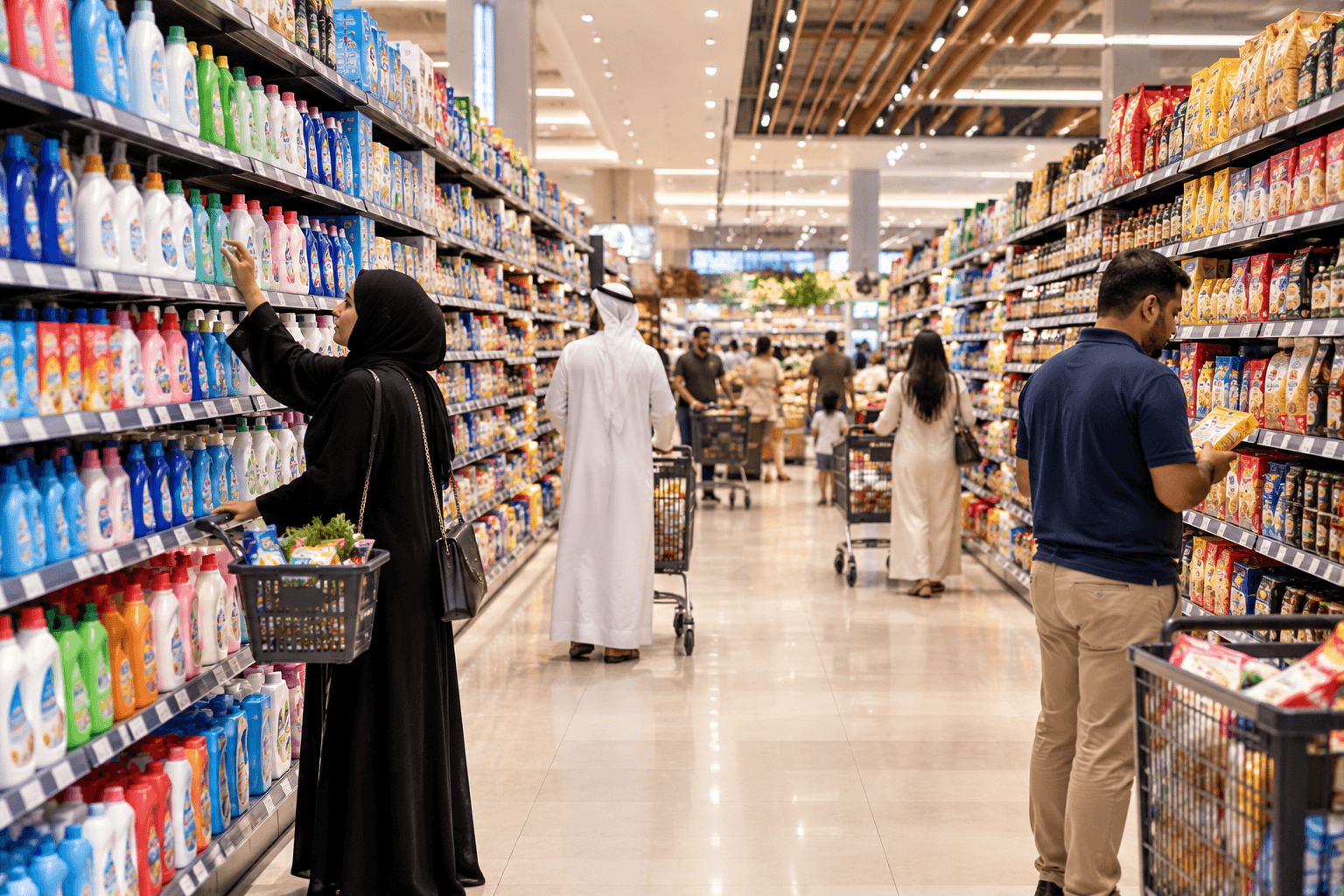
The scale involved is easy to underestimate: FMCG makes up a large share of total consumer spending worldwide, more than most other product categories combined. Much of that spending is habitual rather than researched. Shoppers replace the same toothpaste or detergent on autopilot, and a meaningful share of purchases in the category happen on impulse at the shelf itself, which is exactly why brand visibility and consistent availability matter as much as the product's own merits.
Common Characteristics of FMCG Products
- Low unit price relative to durable goods
- High purchase frequency, bought weekly or even daily by the same household. Demand in many FMCG categories holds up through economic downturns, because these are essential purchases rather than discretionary ones
- Short shelf life or fast consumption, whether due to perishability (dairy, fresh produce), routine use (toothpaste, shampoo), or simply high consumer demand
- High retail volume, low margin per unit. High turnover rates and thin profit margins mean profitability comes from velocity, not markup, which makes inventory and supply chain management a commercial issue rather than a back-office one
- Brand-driven repeat purchase, since the same categories get bought over and over, brand loyalty and shelf visibility matter disproportionately
FMCG Examples by Category
| Category | Examples |
|---|---|
| Food | Cereals and grains, fruits and vegetables, fish and meat, dairy products, baked goods, packaged snacks, sugar, spices, margarine, chocolates and confectionery |
| Beverages | Milk, tea, coffee, juice, soda, and other non-alcoholic drinks |
| Personal care | Toothpaste and oral care, shampoo, soap, cosmetics, fragrances, deodorant |
| Home care | Detergent, cleaning products, tissues |
| Health & OTC | Over-the-counter medication, vitamins |
| Tobacco | Cigarettes and related products |
| Baby & child care | Baby food, diapers, childcare items |
| Pet care | Pet food, pet grooming products |
The companies behind these categories include some of the largest consumer goods businesses in the world, among them Unilever, Nestlé, Procter & Gamble, PepsiCo, Coca-Cola, and Mondelez, alongside major regional manufacturers and distributors. We cover who competes where in this region in our guide to FMCG companies in the GCC.
FMCG vs. Durable Goods
The clean way to tell them apart: would you buy this again next month, or does it need to fail first? A refrigerator or a laptop is a durable good, bought infrequently, used for years. Toothpaste is FMCG, bought again in a few weeks, regardless of whether the last tube "worked." That repurchase cycle is what makes FMCG such a distinct category for retailers and suppliers to manage. It demands efficient inventory and supply chain management, because the business model depends on winning the same purchase decision repeatedly rather than once.
How Big Is the FMCG Market
Market-size estimates for the global FMCG sector vary by research house, generally landing in the range of USD 13.7 to 15.2 trillion for 2026, with most forecasts projecting continued growth through the early 2030s at a compound annual growth rate of roughly 4 to 5%. The spread between estimates reflects differences in exactly which categories each research firm counts as FMCG versus adjacent categories like durable consumer electronics, so treat any single figure as directional rather than precise.
What the disagreement doesn't change is the sector's weight. FMCG is one of the largest parts of the global economy and contributes significantly to GDP in many countries, and because demand tracks everyday household behaviour, category performance is often read as a proxy for consumer confidence more broadly. Global averages also hide a lot of regional variation: UAE retail value sales grew 7% in 2025 to reach AED 256,136 million, outperforming both regional and global peers. We break the sector down by category and trade channel in our guide to the FMCG industry.
Where FMCG Suppliers and Retailers Actually Compete
Because FMCG is a repeat-purchase business, the two things that determine whether a product wins shelf space over time aren't glamorous. The first is getting the assortment right, which now means data-driven decision-making against real demand signals across supermarkets, convenience stores, and online platforms rather than repeating last year's range. The second is running a joint business plan that turns supplier and retailer goals into a shared, working plan instead of an annual negotiation. The sector runs on a distribution network connecting suppliers, retailers, and distributors, and a product that fails at any of those handoffs never reaches the shopper at all. Everything else, the branding, the innovation, the marketing, has to clear those two operational hurdles first, especially as e-commerce expands and consumer preferences shift faster than annual planning cycles were built to handle.
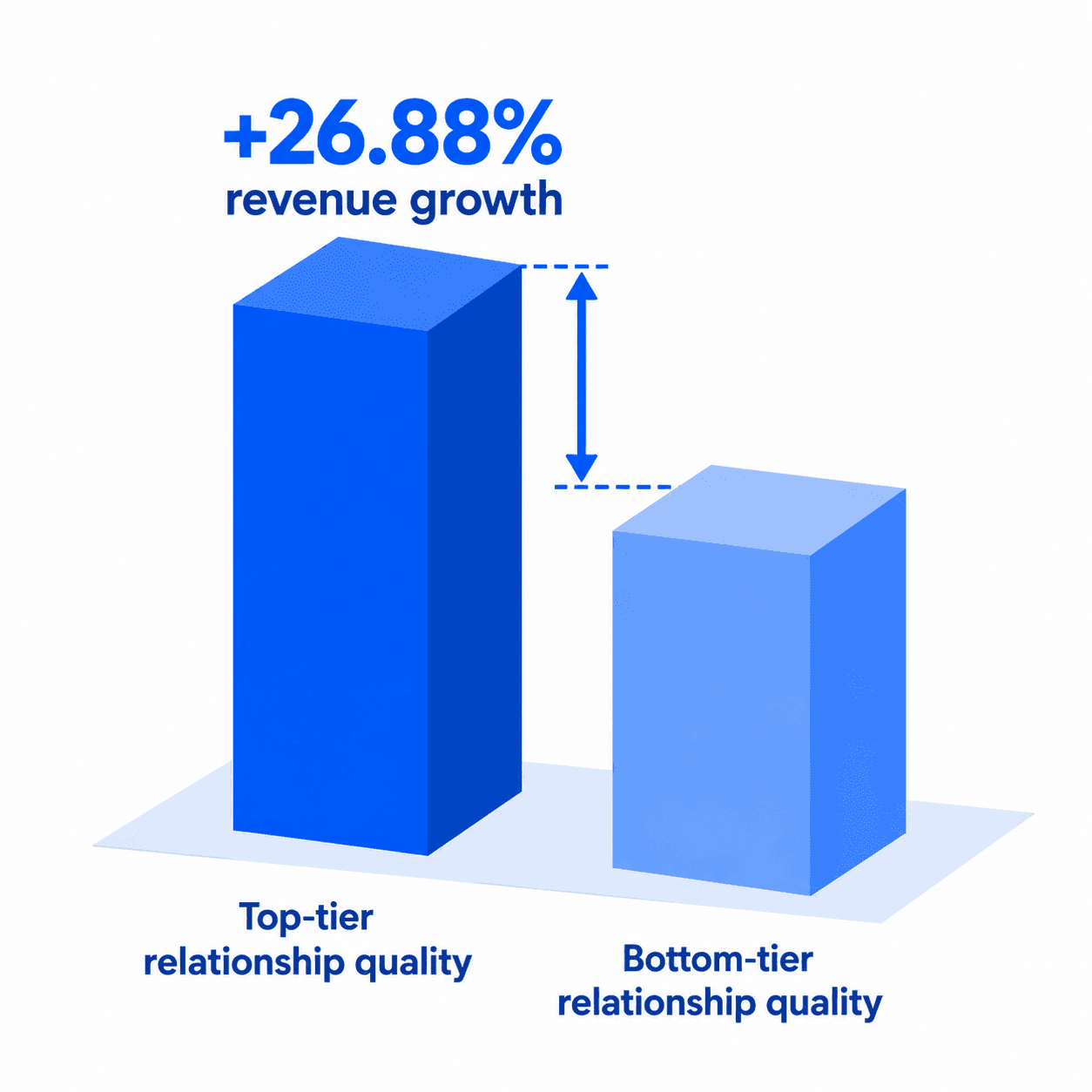
This is measurable rather than just arguable, which is the part most FMCG suppliers underuse. Advantage Group has been benchmarking these relationships for more than three decades across over 45 countries, asking retailers to rate the suppliers they actually work with across five competency areas: Organisation & People, Trade & Shopper Marketing, Supply Chain & Customer Service, Category & Consumer Marketing, and E-commerce. In that benchmarking data, suppliers in the top tier on relationship quality show 26.88% higher annualized revenue growth than those in the bottom tier. If you're an FMCG supplier working out where to focus first, those two levers, assortment and the retailer relationship, are the place to start.
Trends Shaping FMCG Right Now
A handful of consumer shifts are changing what FMCG suppliers and retailers compete on. Demand for health and wellness products, plant-based alternatives, and eco-friendly packaging is growing across categories that used to be far more standardized, and shoppers increasingly expect a degree of product personalization even in low-cost, high-frequency purchases. E-commerce and more advanced technologies are also changing how assortments get built and monitored in the first place, which is why assortment optimization and AI-driven demand forecasting matter more than they did five years ago. None of these trends change the fundamentals. A supplier without the operational discipline underneath them won't benefit from being early to a trend.
Frequently Asked Questions
What is FMCG?
Fast-moving consumer goods: low-cost products that sell in high volumes and turn over quickly, such as food, beverages, toiletries, and household items. Because repeat purchase drives the category, companies in this space also invest heavily in marketing and advertising, from digital and social campaigns to in-store promotions and displays.
What are examples of FMCG products?
Milk, bread, toothpaste, shampoo, detergent, soft drinks, and packaged snacks are all common FMCG examples, spanning food & beverage, personal care, and home care categories.
What's the difference between FMCG and CPG?
They're largely interchangeable. FMCG is more common outside North America and emphasizes fast turnover specifically; CPG (consumer packaged goods) is the more common U.S. term and technically covers a slightly broader range of packaged products.
How big is the FMCG industry?
Estimates vary by research firm, but most place the global FMCG market in the range of USD 13.7 to 15.2 trillion for 2026, growing at roughly 4 to 5% annually.
Is FMCG the same as retail?
No. FMCG describes a type of product and the companies that make it. Retail describes the channel those products are sold through. An FMCG supplier manufactures the goods; a retailer decides which of them get shelf space, which is why the relationship between the two decides so much of the commercial outcome.
What are the biggest challenges FMCG companies face?
Thin per-unit margins that depend on volume, intense competition for limited shelf space, and the operational discipline required to keep an assortment and a retailer relationship both working continuously rather than as annual events. Companies also have to adapt to rising demand for health and wellness products, sustainability expectations, and product personalization.
FMCG is a repeat-purchase business built on habit, not novelty. That's exactly why the operational fundamentals (getting the assortment right, and running a joint business plan that actually works) matter more here than branding alone, since the same purchase decision has to be won again next week, not just once.